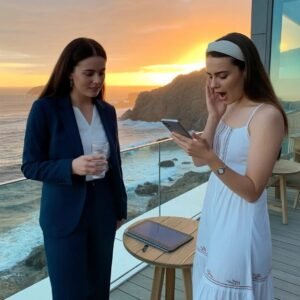

Vanessa walked out without looking at him. Outside in the spring sunlight on the courthouse steps, I took the deepest breath I had taken in six months. Six months later I sat on my patio watching the Sacramento sunset with a glass of wine.
I had repainted the house, filled it with plants and framed photographs, and removed every trace of what had shrunk me. I flew to Italy alone in December and spent two glorious weeks eating pasta and drinking wine in small restaurants where nobody knew my name or my story, and remembered that freedom can feel like sunlight on old skin. I started painting again.
I joined a book club. I volunteered at the library. My relationships with my children deepened into something richer, more honest, because no one was performing anymore.
Through Linda I heard that Vanessa left Robert within weeks of the ruling, furious at how much he had lost. He ended up alone in a small condo, having made a series of poor financial decisions that cost him a substantial portion of what remained. He asked about me, Linda said.
That was enough. I was sixty-eight, divorced, and happier than I had been in years. Robert thought that money would buy him freedom, admiration, a younger future.
Instead it revealed him. Instead it bought him loneliness and consequences and the belated understanding that what he had discarded had been worth considerably more than he knew. What I learned — in sleepless nights and courtroom mornings and coffee with women who had survived similar things — was simple and costly and worth every difficult moment it took to understand.
It is never too late to stand up for yourself. Dignity matters more than comfort. And your worth has never depended on someone else’s willingness to see it.