
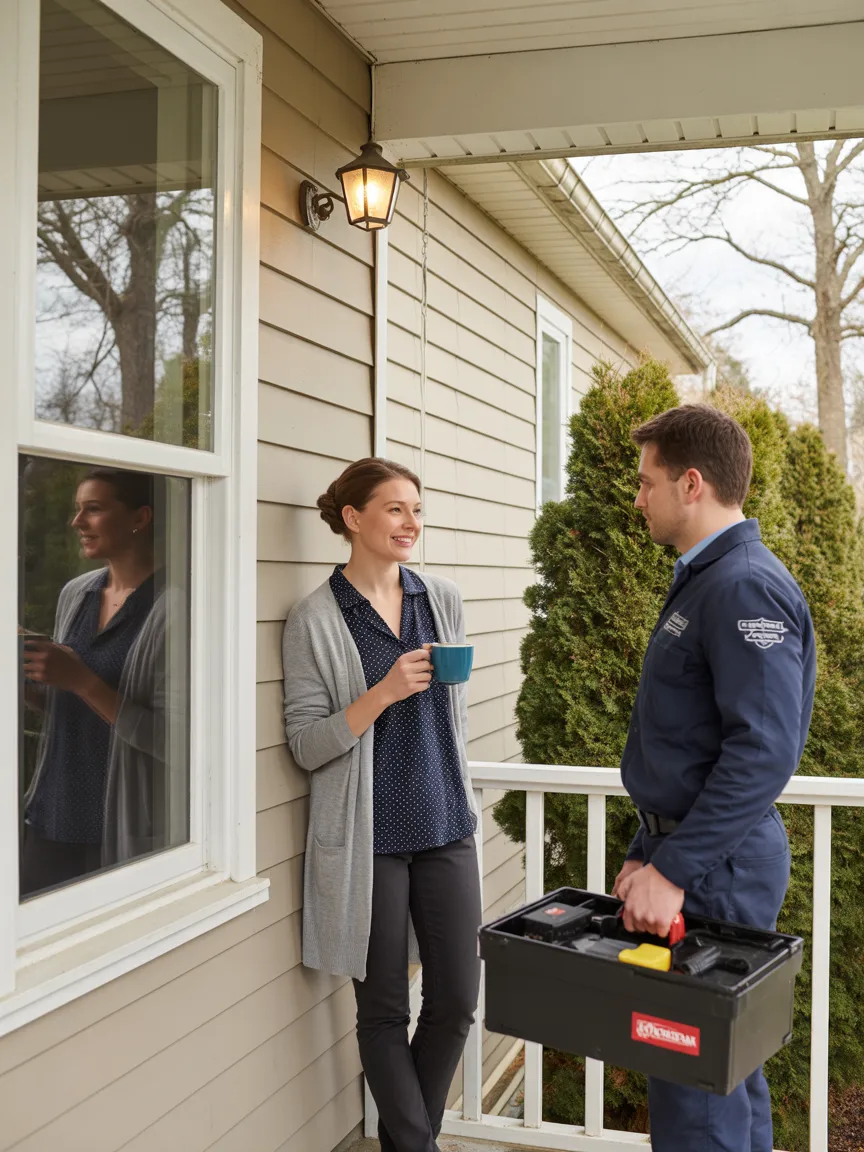
None asked if I was all right. The assumption beneath every sentence was that my mother was central, injured, deserving of explanation. I was just the difficult perimeter around her story.
So I typed one response and sent it separately to each of them: On Tuesday my mother used an emergency key to enter my home without permission after I had explicitly said no. Today she returned with a locksmith to change my locks without my permission. Both incidents were documented by police.
This is not a misunderstanding. It is a pattern. I will not discuss it further unless the facts are acknowledged accurately.
Then I turned my phone face down. The problem with growing up as the responsible one is that people learn to mistake your steadiness for endless capacity. I had been hearing the same story about myself for years.
Alicia is practical. Alicia is mature. Alicia doesn’t need much.
Alicia can absorb a little discomfort because Rachel is the one in crisis again. It sounds flattering from a distance, that story. But under the surface it is often just a prettier way of saying your needs are easier to ignore.
Rachel had been the center of gravity in our family for as long as I could remember, not because she was malicious exactly but because she was perpetually in some new chaos that demanded immediate attention. My mother never called it irresponsibility. She called it sensitivity, bad luck, instability caused by other people’s harshness.
Rachel did not fail; life happened to Rachel. Which meant everyone else had to bend around the impact. I used to bend.
At nineteen I lent Rachel my car for a week and she returned it sixteen days later with an empty tank and a parking ticket shoved under the seat. At twenty-four I gave her eight hundred dollars for a security deposit because my mother cried on the phone and said if you don’t help your sister who will. I never saw the money again.
Each time, the family’s emergency architecture required my flexibility as a structural component. I had not understood that until I had something they could not easily take from me. There is something about owning property, about signing your name to thirty years of responsibility and painting walls with your own hands and paying to fix what breaks, that makes the lines of personhood sharpen.
This is mine. I chose this. I maintain this.
I remembered the day I got the keys. I stood in the empty living room while sunlight fell across the hardwood in long gold bars and cried so hard I had to sit on the floor. Not because the house was perfect but because I had done it.
Me. Alicia, who everyone assumed could manage alone because she always had. Two years later, on an afternoon when my mother had been unusually pleasant and complimented the curtains in the guest room, I had given her a spare key.
For emergencies, she said. I had hesitated for half a heartbeat, and she said, don’t look at me like that, I’m your mother not a burglar. So I laughed because it sounded silly then, and I wanted it to be what she said it was.
I scheduled a consultation with an attorney recommended through work, a woman named Sandra Liu who specialized in property and harassment cases. She read my incident notes, listened to my summary without interrupting, and said: “Your mother is using familial access to create ambiguity around your rights. The ambiguity is strategic.
We remove that, and a lot of this becomes easier.” She drafted a formal no-trespass letter stating plainly that my mother did not have permission to enter, access, alter, or authorize work on my property and that any future attempt to do so would result in legal action. We sent it by certified mail and by email because Sandra believed in redundancy. When I got back to my office, my manager Owen said I looked like I’d come from a deposition.
“Close enough,” I said. Later, in the break room, I gave him the short version. He blinked twice.
“Your mother hired a locksmith to change your locks?” “Yes.” He was quiet a moment. “Then I’m sorry. And also impressed you didn’t throw the coffee.”
Privately, I wasn’t sure if restraint was maturity or simply old conditioning in a better outfit.
Growing up in my family had taught me that visible anger could be used against you for years. If I had screamed on the porch that Thursday morning, that would have become the story. Not the locksmith.
Not the attempted forced entry. My anger. My instability.
My cruelty. My mother would have folded herself into the role of wounded helper and everyone would have rushed in with casseroles and sympathy. Calm unnerved them instead.
Procedure unnerved them. Documentation, plain language, and witnesses made them stand in the shape of what they had done without the smoke machine of emotion to blur the outline. Rachel called that Tuesday night.
I let it ring twice. “Mom’s freaking out,” she said. “She says you sent her some legal thing.” I confirmed I had.
She said I was treating my own mother like a criminal. I said her mother came to my house with a locksmith. “She was trying to fix things.” “No,” I said.
“She was trying to get control back.” Rachel’s breathing sharpened. “You’ve always been like this. Cold.
Self-righteous. Acting like because you have a decent job and a little house you’re above everybody.” There it was. When reason failed, class resentment.
As if my mortgage had fallen from the sky. As if my little house had not cost me years of effort they never noticed because noticing would have required admitting I built something without them. “I’m not above anybody,” I said.
“But I am the owner of that house, and that matters.” There was a long pause. Then, in a smaller voice: “I really did need somewhere to go.” And there it was, the thing beneath the manipulation. Real need.
Real instability. My sister genuinely needed somewhere to land. She was, however, using her need the way our family always had: as an all-access pass through someone else’s autonomy.
“I believe you needed help,” I said. “That still doesn’t give you the right to move into my house without permission.” When she hung up, I sat in the dark living room for a long time and thought about every time I had bent until something in me cracked quietly, quietly enough that no one needed to notice. December brought the first test of whether the new line would hold in public.
My cousin Evan hosted the family Christmas brunch, and I considered skipping it until Denise, my mother’s older sister and the family’s most reliably unsentimental voice, called and said, “Come. Make your mother choke on a cinnamon roll.” I went. Not for theater.
Because I was tired of shaping my movements around my mother’s reactions. If the boundary was real, it had to survive daylight. Evan’s house smelled like coffee and bacon and orange zest.
I arrived with a fruit tart and a cardigan that made me feel composed. My mother was in the living room beside the tree when I walked in. Rachel sat on the couch scrolling her phone.
Conversation thinned for half a beat, the tiny social hush that falls when unresolved conflict enters a room wearing boots and carrying dessert. I moved past them, greeted people, made a plate, talked to my uncle about his hip replacement. I did not perform discomfort for anyone’s satisfaction.
Eventually my mother approached me in the kitchen while I refilled my coffee. “Can we speak privately?” she said. “No,” I said.
Her eyes narrowed. “If you have something to say, you can say it here.” Around us, dishes clinked. My mother lowered her voice.
“You have embarrassed this family enough.” I almost smiled. It was always fascinating when the person who violated became the one talking about embarrassment. “You brought a locksmith to my house,” I said at a normal volume.
“I’m comfortable with my side of the story.” The kitchen went very still. My mother said she had been trying to help my sister. I said she had been overruling me.
She said that was what family did. I said family asks. Then Rachel appeared in the doorway, drawn by tension the way our family always was.
“Can we not do this?” I turned to her. “Then stop pretending I did something wrong.” Her mouth fell open. “You know what?
You’ve always been cold. Self-righteous.” My mother said enough, Alicia. And something in me simply stopped performing patience.