One evening, he sat me down at my kitchen table, the same table where Harold and I had shared thousands of meals.
“Mom,” he said, his voice gentle, concerned, “I’ve been thinking. You shouldn’t be alone right now. It’s not healthy.”
I told him I was managing just fine, and I was.
Grief is hard, but I’d learned over the years that being alone and being lonely are two different things.
But Michael persisted.
“Amanda and I have been talking,” he said.
“We have that extra room downstairs. The kids would love having you closer.
And honestly, Mom, we could use your help. Amanda’s working full-time now, and daycare is so expensive.”
The way he said it made it sound like we’d both be helping each other, like it was a partnership.
“You could stay in your house,” he continued.
“But wouldn’t it be nice to wake up to the sound of the grandkids, to have family around?”
When he put it that way, how could I say no?
I thought about those quiet mornings in my empty house, making coffee for one, eating dinner alone while the television hummed in the background.
The idea of being surrounded by life again, by laughter and noise and purpose, felt like exactly what I needed.
So I said yes.
Michael was thrilled. He hugged me tight and promised it would be wonderful.
“We’re going to take such good care of you, Mom.”
What he didn’t mention right away was that he needed help with the down payment on a bigger house. The one they were renting was too small, he explained.
But if we pulled our resources, we could get something really nice, something with room for everyone.
I had the money.
Harold had been careful with our savings, and the life insurance policy had been generous. Michael said I could think of it as an investment in our family’s future.
I wrote the check without hesitation.
Looking back now, I can see how it all unfolded.
But at the time, I was just a widow who wanted to feel needed again.
The first few months in the new house were exactly what Michael had promised.
I’d wake up to the sound of my grandchildren giggling in the next room. Amanda would ask my advice about recipes.
Michael would sit with me in the evenings and tell me about his day at work.
I felt useful again.
I took care of the kids while Michael and Amanda worked.
I’d pack their lunches, help with homework, read bedtime stories. When Amanda mentioned the old washing machine was broken, I bought a new one. When Michael said they were struggling with the electric bill one winter, I quietly took over the utilities.
It felt good to help, to be the kind of mother and grandmother who could ease their burdens.
They called me a blessing.
That word came up a lot.
“You’re such a blessing, Mom.”
“We’re so blessed to have you here.”
I wore that word like a warm coat.
But somewhere along the way, things shifted.
It happened so gradually that I didn’t notice at first.
The requests for help became expectations. The gratitude became assumptions.
When I suggested maybe I’d like to visit my friend Dorothy one weekend, Amanda looked surprised.
“But who will watch the kids?”
When I mentioned I was tired one evening and might skip cooking dinner, Michael seemed annoyed.
“We were counting on you, Mom.”
The phrase “We were counting on you” came up more and more.
I started to feel less like family and more like staff.
But I told myself I was being sensitive. They were busy, stressed, working hard.
Of course, they relied on me.
That’s what family does. We help each other.
Then came the moment that should have woken me up sooner.
It was about six months ago. I wasn’t feeling well, just a spring cold, and I’d gone to lie down early.
I was in my room with the door cracked open when I heard Amanda on the phone in the hallway.
“I know, I know,” she was saying to someone, her voice carrying that tone people use when they’re venting.
“She means well, but she’s so set in her ways. Everything has to be done her way, and honestly, sometimes it’s just easier to work around her.”
There was a pause while the person on the other end spoke.
“Oh, we can’t ask her to leave,” Amanda continued.
“Michael would never forgive himself. Plus, she helps with so much.
The bills, the kids.
We’d be lost without her money.”
She laughed a little, low and tired.
“Honestly, her money. Not her. Her money.”
I lay very still in my bed, staring at the ceiling, feeling something cold settle in my chest.
She kept talking.
“But between you and me, sometimes I just want my house back.
You know what I mean?
Like, it’s nice having the help, but I miss having our own space.”
Our own space.
As if I was intruding. As if this wasn’t the house I’d helped buy.
I didn’t confront her.
I didn’t mention what I’d heard. I just filed it away in some quiet corner of my mind and kept going, because what else could I do?
Where else would I go?
I convinced myself I’d misunderstood.
That Amanda was just having a bad day. That she didn’t really mean it the way it sounded.
But after that, I started noticing other things.
The way they’d make plans without asking if I wanted to join. The way Amanda would reorganize the kitchen after I’d cooked, moving things to where she preferred them.
The way Michael would talk about his house and his mortgage, even though my name was on half the paperwork and I’d paid far more than half the bills.
I was living in their space, cooking in their kitchen, helping raise their children, but I was doing it with my money, on my time, with my energy.
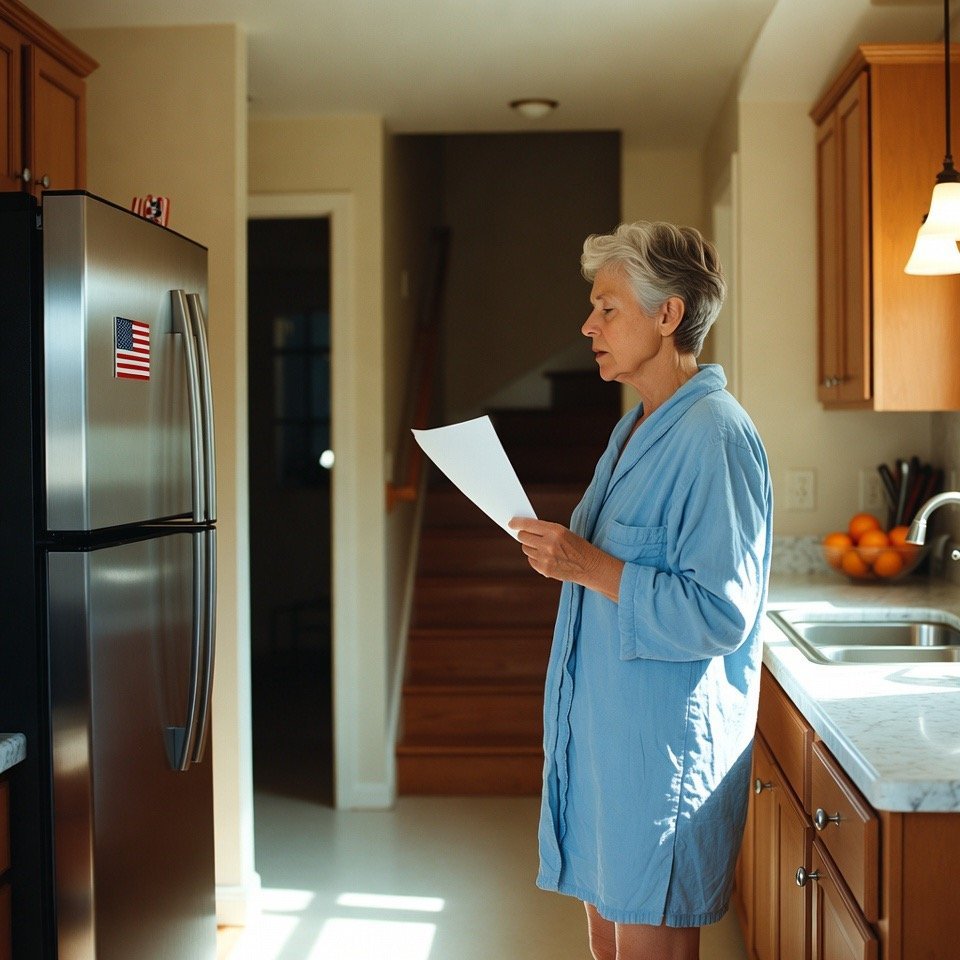
Sitting at that kitchen table on Thanksgiving morning, holding my coffee and staring at that note, all of those memories arranged themselves into a pattern I couldn’t ignore anymore.
I hadn’t been invited to live with them because they loved me.
I’d been invited because I was useful. And the moment I wasn’t useful, the moment I might be inconvenient, they’d left me behind without a second thought.
I finished my coffee and stood up slowly.
For three years, I’d convinced myself this was my home.
But it wasn’t.
It was their house, one I’d been paying for while pretending I belonged.
And as I rinsed my cup in the sink and placed it carefully in the dish rack, I realized something that should have scared me but didn’t.
I was done pretending.
I picked up that note again. My fingers traced over Amanda’s handwriting, smooth and confident.
She’d probably written it quickly, maybe while packing her suitcase, squeezing it in between choosing swimsuits and booking excursions.
You wouldn’t have liked the flight.
That sentence bothered me more than the rest.
Not because it was cruel, but because it was so casual, so certain, as if she knew me well enough to decide what I would or wouldn’t enjoy without ever asking.
Had I ever said I didn’t like flying? I couldn’t remember. Harold and I had flown to visit his sister in Arizona years ago.
It was fine.
A little cramped maybe, but nothing I couldn’t handle.
But that wasn’t really the point, was it?
The point was that they’d made a choice. A family vacation.
Hawaii. Thanksgiving week.
And somewhere in all that planning, all those excited conversations about beaches and resorts and luaus, they decided I didn’t fit.
I folded the note and set it down.
My hands felt steady. My mind felt clear.
I walked through the living room slowly, my slippers shuffling against the hardwood floor I’d paid to have refinished last year. The morning light was stronger now, pouring through the windows and illuminating everything with that particular brightness that makes dust particles visible in the air.
I stopped in front of the television—sixty-five inches, mounted on the wall.
Michael had wanted it for the Super Bowl two years ago.
Amanda had thought it was too big, too extravagant. But when I offered to buy it as a Christmas gift, suddenly it was perfect.
I ran my hand along the back of the sofa: cream-colored, modern, the kind with clean lines and firm cushions that look beautiful but aren’t particularly comfortable.
Amanda had seen it in a catalog and fallen in love.