
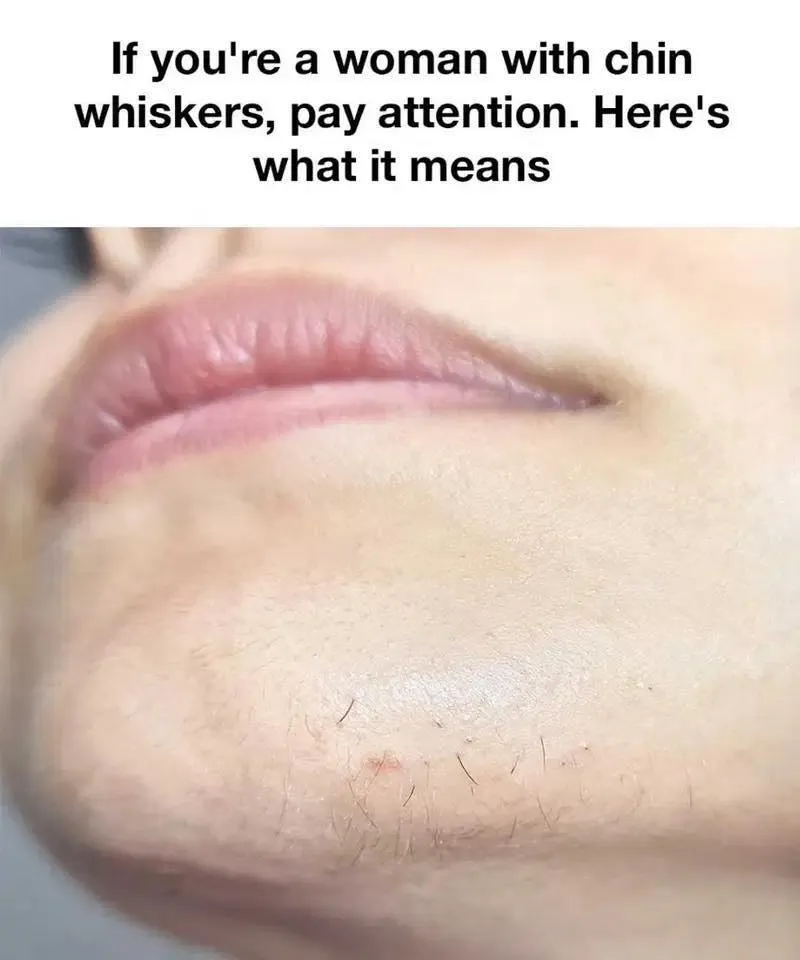
Many women are surprised to learn just how common chin whiskers really are.
These small facial hairs can appear fine and light or coarse and dark, and their presence doesn’t mean something is “wrong.”
Hormonal shifts, genetics, and natural aging all influence hair growth, and for many women, it’s simply a normal part of life.
Understanding why they appear can make the experience far less stressful and remove the shame society often attaches to them.
Hormones play a major role, especially androgens, which all women produce in small amounts.
Conditions like PCOS, menopause-related hormone changes, or even certain medications can lead to more noticeable facial hair.
Genetics also shape how visible chin hairs can be—if your mother, grandmother, or other close relatives experienced it, you might too.
While sudden or excessive growth should be discussed with a doctor, most cases are harmless and manageable.
For women who choose to remove chin whiskers, there are many safe options.
Temporary methods like plucking, waxing, or shaving can work well, while longer-term solutions include laser hair removal, electrolysis, and prescription creams that slow growth.
A dermatologist can help determine what’s best for different skin types, especially for those prone to irritation.
At the same time, lifestyle habits such as maintaining a balanced diet, managing stress, or exploring natural remedies may support hormonal balance.
But beyond the physical, chin whiskers can affect emotional well-being.
Many women feel embarrassed or anxious because of beauty standards that label facial hair as “unfeminine.”
The truth is, facial hair is normal—and millions of women experience it.
Whether someone removes it or embraces it is a personal choice.
What matters most is approaching the topic with kindness toward yourself. With understanding, support, and the right information, chin whiskers don’t have to be a source of shame—they can simply be another part of the body we learn to accept and care for.