He picked up the phone himself and asked if I’d have coffee with him. We met at the French bistro on the Upper East Side — the one with the white tablecloths and the copper pots, the one my mother had loved. He was already seated when I arrived.
He looked older, not in the gradual way aging usually works, but in the sudden way — as if a decade had landed on him in seven days. On the table in front of him was the velvet box. “I opened it,” he said.
The brass compass lay in his palm. I’d spent weeks restoring it — cleaning the patina, repairing the hinge, polishing the case until the engraved initials were legible again. C.H.
My mother had given it to him in their second year together, when he’d told her he wanted to build things and she’d said he needed to know which direction he was facing first. My father turned the compass over in his hands. The needle still worked — trembling, settling, pointing true.
“She was my compass,” he said. “Your mother. And I let someone else steer.”
He was crying quietly, the way men of his generation cry.
Jaw tight. Eyes spilling. No sound.
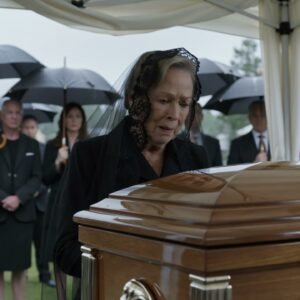
I hadn’t seen him cry since the funeral 23 years ago. I didn’t say it’s okay. Because it wasn’t.
Not yet. Maybe not for a long time. But I said, “I’m glad you’re here, Dad.
That’s a start.”
We ordered coffee. Then, without planning it, we both ordered the croque madame — my mother’s standing order at the same table, every Sunday. Neither of us mentioned it.
We didn’t need to. Three months later, I stood on a stage again. But this time, no one asked security to remove me.
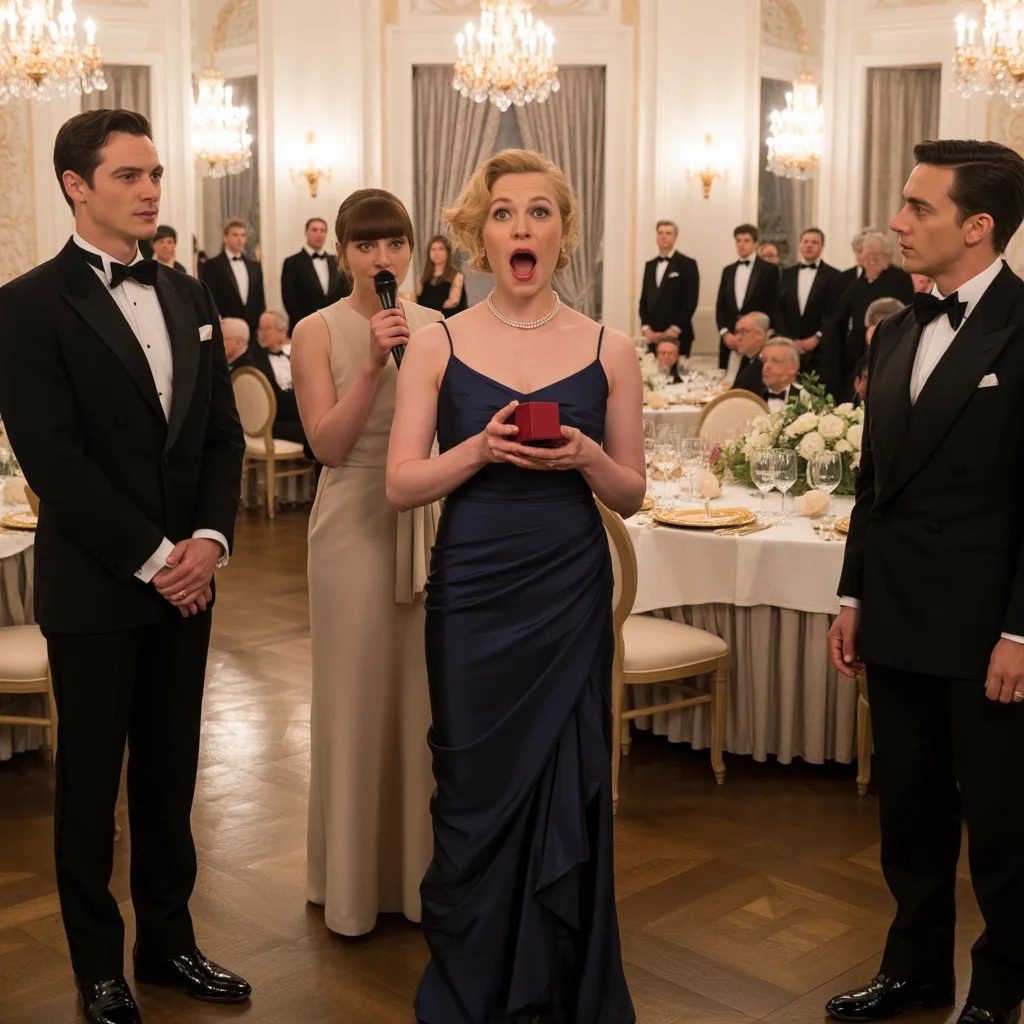
The National Trust for Historic Preservation held its annual gala in Washington, D.C. — black tie, a restored Beaux-Arts ballroom, ironwork and vaulted ceilings and the kind of craftsmanship that makes you believe people once built things to last. I was there as a guest of honor, to present the inaugural project of the Catherine Hail Foundation — a nonprofit I’d established using a portion of the trust funds to restore endangered historic buildings in underserved communities.
My first project: a community center in a formerly redlined neighborhood in Baltimore. Built in 1912. Abandoned in 1987.
Condemned in 2014. We were bringing it back. Load-bearing walls.
Original tile. The whole skeleton saved. I wore emerald green that night.
My mother’s Mikimoto pearl earrings. Behind me on the screen, in letters six feet tall: The Catherine Hail Foundation — Preserving What Matters. My father was in the audience.
Front row. He’d driven from Westchester alone — no Diane, no entourage. Just Richard Paxton in a navy suit, watching his daughter speak.
I talked about buildings. About the ones everyone walks past without seeing. About the ones that get condemned because it’s easier to tear something down than to do the hard, slow, unglamorous work of finding what’s still good underneath.
I talked about my mother — an architect I never knew was an architect, who built things that held for decades because she understood that everything beautiful starts with structure. When I finished, the room stood. My father stood first.
Afterward, he found me near the coat check, holding a flat rectangular package wrapped in brown paper. I opened it. The architectural rendering.
The first commercial property he’d ever purchased, back in 1989 — the one I’d tracked down from the county archive, stabilized, reframed in reclaimed walnut and given to him at the house three weeks before the party. The gift Diane had called sweet and dismissed. Now it was framed in dark walnut with museum-quality glass.
Archival matting. The whole treatment. “It’s been on my wall since the day you gave it to me,” he said.
“I just never told Diane.”
I held the frame against my chest and looked at my father — this flawed, frightened, trying man — and I didn’t say it’s okay. I said, “Thank you, Dad. That means more than you know.”
We walked out together into the cool D.C.
night. Two weeks later, a handwritten letter arrived in my mailbox. Three pages, front and back, in careful script.
Meredith. An apology — not the performative kind, not the kind that explains itself away. The raw, stumbling, honest kind that a 26-year-old writes when she’s seeing her life clearly for the first time.
I haven’t replied yet. But the letter sits on my desk beside my mother’s letter, beside the compass box. Some things take time.
Some buildings can’t be restored in a season. But the foundation — the real one, the one beneath everything — is sound. So here’s where I am now.
I didn’t win because I screamed louder. I didn’t win because I had more money or more cruelty than the people who tried to erase me. I won because 23 years ago, while she was dying, my mother sat down with a lawyer and a stack of legal paper and built something that would hold.
She didn’t do it with drama. She didn’t do it with anger. She did it with structure.
The same way she built everything. I used to think strength meant enduring. Showing up to every dinner, sitting at the small table, driving home in silence, swallowing whatever was served, and calling it family.
I thought if I was patient enough, quiet enough, good enough, someone would eventually see me. No one was going to see me. Not because I was invisible — but because the people around me had decided that my invisibility was convenient.
The only person who could change that was the one standing in the mirror. My mother left me a letter. It said: Find him.
What I found wasn’t just a lawyer or a trust document or $17 million. I found the thing she’d really been protecting all along. My right to take up space.
Thank you, Mom. For the letter. For Mr.
Aldridge. For the pearls. For teaching me that some buildings are worth saving.
Including the one I live in.